Russia’s war of aggression against Ukraine has led to a lasting deterioration of the security situation in Europe. It has exposed how vulnerable modern societies are when central systems for energy, transport and communication are disrupted or attacked. Pipeline incidents, cyber attacks on networks networks and critical infrastructure as well as interruptions in logistics have shown that security policy can no longer be separated from the protection of infrastructure and the functioning of the economy.
The German government captured this shift with the term “Zeitenwende”, which describes a fundamental reassessment of security risks and dependencies across Europe. The creation of the special defence fund is only one visible outcome. More importantly, the situation triggered a broader change in public and political thinking. There is now a clearer awareness that national security depends on resilient energy systems, transport networks and communication infrastructure, and that these must remain operational even under stress.
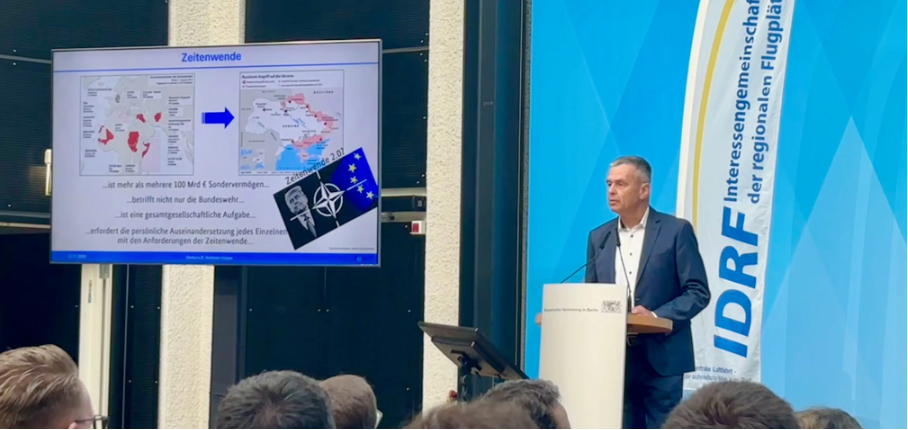
The German federal government pursues an integrated security approach that views defence, resilience and economic stability as parts of a connected system. In this perspective, secure and robust supply chains and reliable transport corridors are not only economic interests but elements of national and European security.
The concept of critical infrastructure, referred to as KRITIS, provides the overarching reference point. It covers facilities and systems whose failure or impairment would cause significant disruption to public life, economic activity or state functions. Energy, logistics and transport as well as communication are central pillars within this KRITIS understanding and have moved to the centre of political and regulatory attention.
This conceptual approach is now being translated into binding law. In September 2025, the federal cabinet adopted the draft of the KRITIS Umbrella Act (KRITIS-Dachgesetz) [5]. The act defines the most important KRITIS operators in eleven sectors, including transport, and introduces cross-sectoral minimum requirements for physical protection and resilience. Operators must carry out risk assessments based on national risk analyses, draw up resilience plans following an all-hazards approach and report relevant incidents into a national monitoring system.
For operators and public authorities, the KRITIS umbrella act thus creates a common benchmark for protection standards, risk management and investment decisions in critical infrastructure. Within this framework, airports emerge as particularly sensitive nodes because they combine transport, logistics and security functions in a single location.
Airports as Quasi-Critical Infrastructure
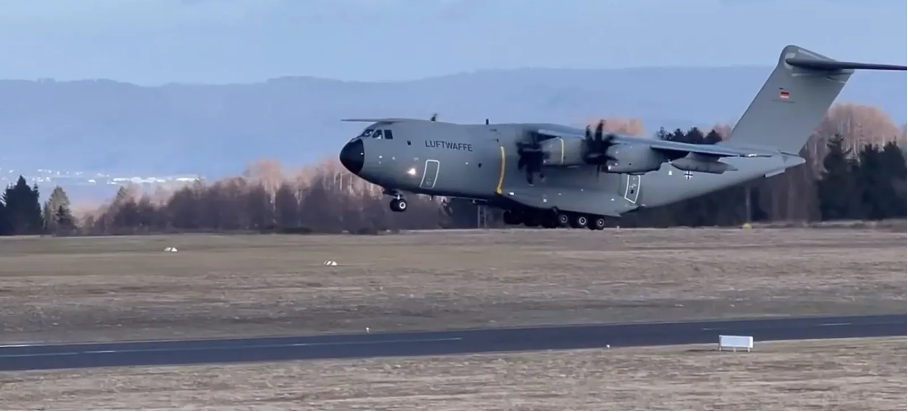
The security role of airports becomes particularly clear where civil and military uses are combined. Locations such as Leipzig/Halle Airport or Cologne Bonn Airport show how closely civilian air traffic, air freight and military transport are intertwined. In such cases, the airport is a node in several networks at once [3][4]. It links transport flows on the ground and in the air, connects energy systems and supports security and defence tasks. Interruptions at these nodes would therefore affect both civilian life and military capability.

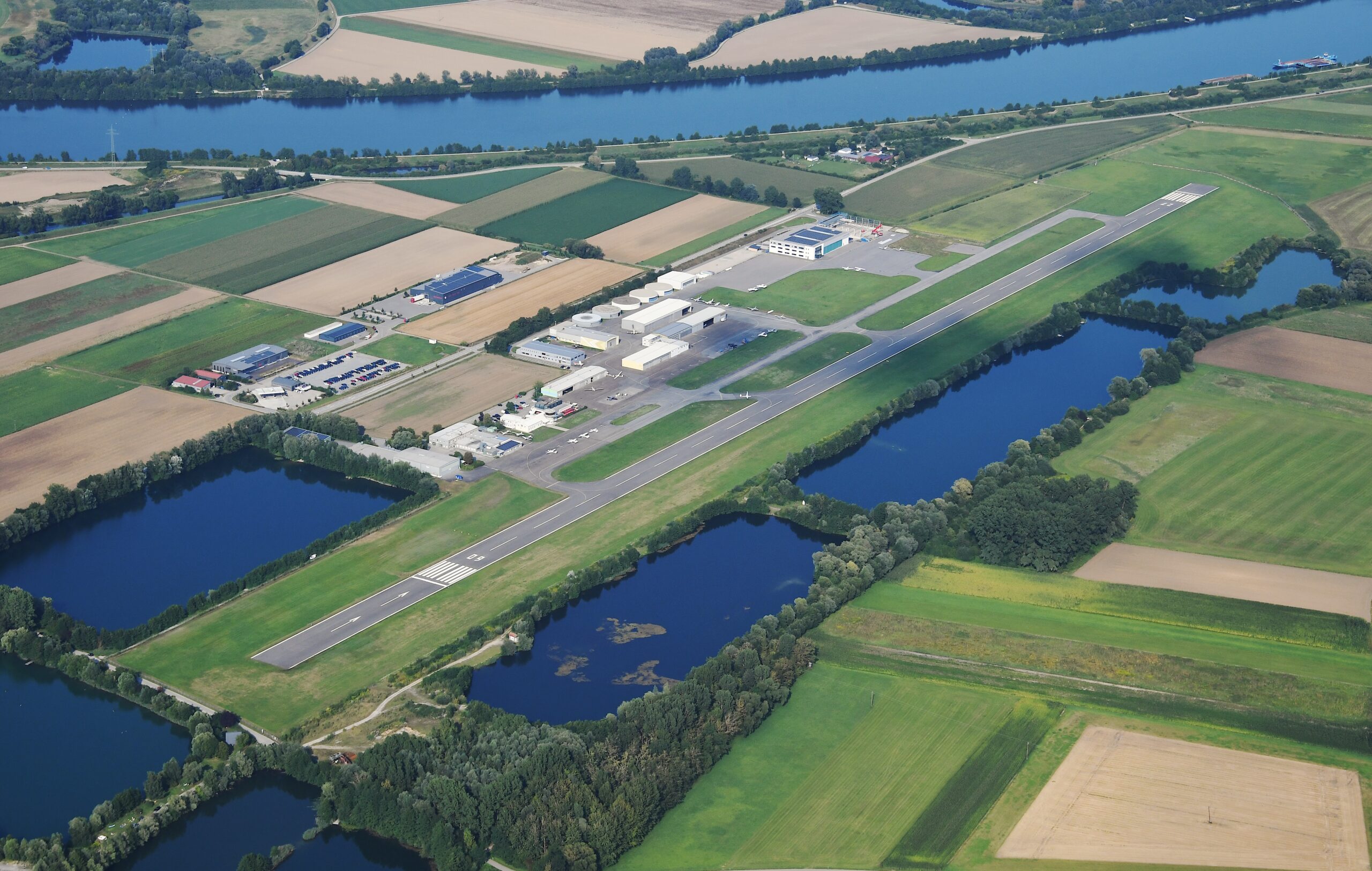
Regional airports occupy a special position in this context. Many of them are not yet formally classified as critical infrastructure, yet they already function as such in practice. They secure international connectivity for regions, enable medical evacuation flights, serve as a location factor for companies and provide a considerable number of jobs. Studies and parliamentary enquiriesat European level underline this role and provide empirical support for the assessment of airports as de facto critical infrastructure [1][2].
“Europe’s many regional airports enable international exchange and connect citizens, companies and SMEs from all over Europe with the world. Despite this key role for economic activity, in recent years the financial situation for regional airports has worsened mainly due to extrinsic shocks, such as the COVID-19 crisis, global turbulence in the aviation sector and Russia’s war against Ukraine. The financial situation of many regional airports is bleak, threatening their core existence and endangering their important role for societies and regional prosperity.”
– 08.05.2025, Parliamentary question, E-001864/2025 [1]
Military Operations as Critical Features
Regional airports across Germany demonstrate their security relevance through regular support of military operations. Airport Hof-Plauen illustrates this role particularly well. It holds full certification as a public-use airport with instrument flight capability, allowing it to serve both civilian traffic and military operations. Military helicopters and transport aircraft of the German Armed Forces (Bundeswehr) use the airport on a regular basis. Smaller helicopters conduct training flights under visual and instrument flight rules and refuel on site. Larger helicopters such as the CH53 and the Black Hawk use Airport Hof-Plauen as a midway refuelling point. They also operate from the airport during missions such as wildfire response. Training flights with A400M and C130J aircraft, which according to the German Armed Forces take place up to eight times per month [8], underline the role of the airport for defence and crisis readiness.
Siegerland Airport serves a similar function, regularly hosting A400M transport aircraft for training missions [9]. These examples show a broader pattern: regional airports with suitable runway infrastructure and operational capabilities provide the German Armed Forces with a decentralized network of training locations, refuelling points and potential deployment bases. This geographic distribution strengthens operational flexibility and reduces dependence on a small number of military airbases.
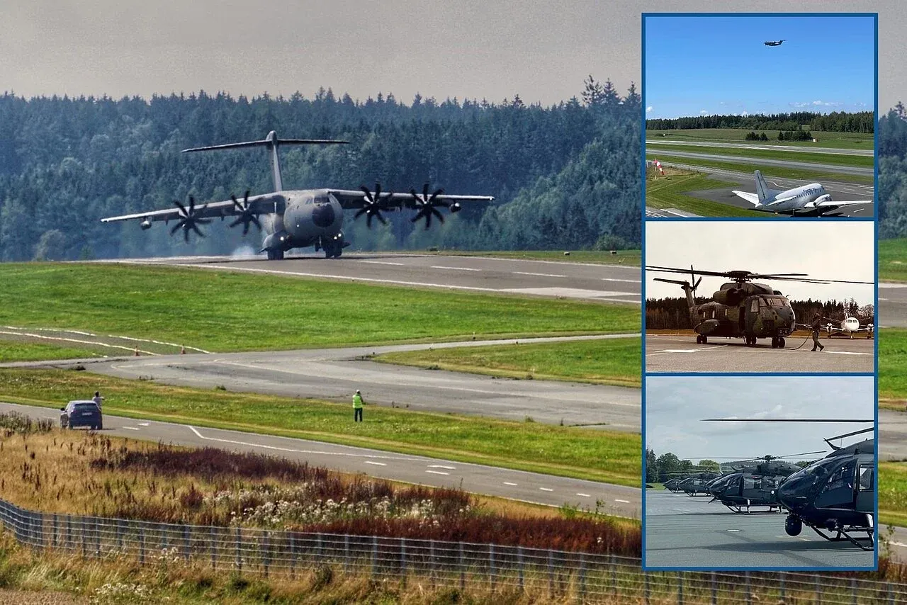
The combination of civilian certification, professional ground handling and sufficient runway length makes these airports attractive for military use without requiring dedicated military infrastructure. In peacetime, they support routine training and logistics. In crisis situations, they can serve as alternative hubs if primary military or civilian airports face capacity constraints, technical disruptions or security incidents. This dual-use potential positions regional airports as an integral component of national defence infrastructure, even without formal classification as military installations.
Critical Hubs for Civil Protection or Disaster Response
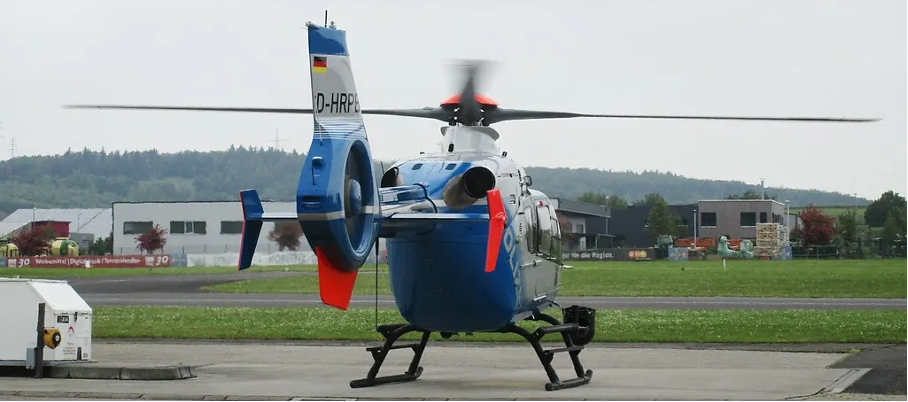
Beyond their role for the armed forces, regional airports and airfields are also key nodes for civilian and law enforcement helicopter operations. State police (Polizei), the Federal Police (Bundespolizei) and air rescue operators such as ADAC Luftrettungand DRF Luftrettung use regional airfields as refuelling points, training locations and forward operating bases. In everyday operations, this enables rapid response to traffic accidents, medical emergencies and search and rescue missions in rural areas.
A prominent example is Koblenz-Winningen Airfield, where the police helicopter squadron of Rhineland-Palatinate (Polizeihubschrauberstaffel, PHuSt) has been based since the 1970s. From there, modern multi-purpose helicopters are deployed for search missions, crime-fighting, environmental and traffic surveillance, the transport of special forces and support to air rescue and firefighting. An in-house maintenance capability keeps the fleet operational with minimal external dependencies [10].
Yet the strategic value of regional airports extends beyond helicopter operations. The availability of paved runways allows regional airports to handle fixed-wing aircraft for time-critical missions that helicopters cannot efficiently perform.
Organ and patient transport flights operate regularly from regional airports. Hannover Airport, where AeroWest GmbH handles 60 percent of all German flights for the German Organ Transplantation Foundation (DSO), is a prominent example [16][17].
DRF Luftrettung conduct similar operations from Karlsruhe/Baden-Baden Airport [18]. These operations save lives by maintaining a decentralized network of departure points that reduce transport times and provide geographical redundancy when larger hubs face capacity constraints or disruptions.

In crisis scenarios, this runway capability becomes even more critical. The 2021 Ahr Valley flood, Germany’s most devastating natural disaster since the 1962 Hamburg storm surge, demonstrated how quickly airfields can be scaled up to serve as logistics hubs. At Bad Neuenahr-Ahrweiler Airfield (Bengener Heide), helicopters transported flood victims from the upper Ahr valley and carried relief material into affected areas [11]. Had the crisis required it, the runway could have accommodated larger transport aircraft for bulk cargo movements or mass evacuations.
With climate change increasing the frequency and intensity of extreme weather events, the potential role of regional airports in crisis response continues to expand. The 2022 wildfire in Saxon Switzerland illustrates the changing threat landscape. This fire, which burned 113 hectares in the Saxon Switzerland National Park and over 1,000 hectares in the neighboring Bohemian Switzerland National Park in July and August 2022, required extensive aerial firefighting support [21].
While Germany has traditionally relied on helicopter-based firefighting, larger fixed-wing firefighting aircraft such as the Canadair CL-415, which are widely deployed in Southern European countries including France, Italy, Spain, Greece and Croatia [22], could operate from regional airports if wildfire patterns continue to intensify. The infrastructure is already in place; what matters is the operational readiness and integration into civil protection planning.
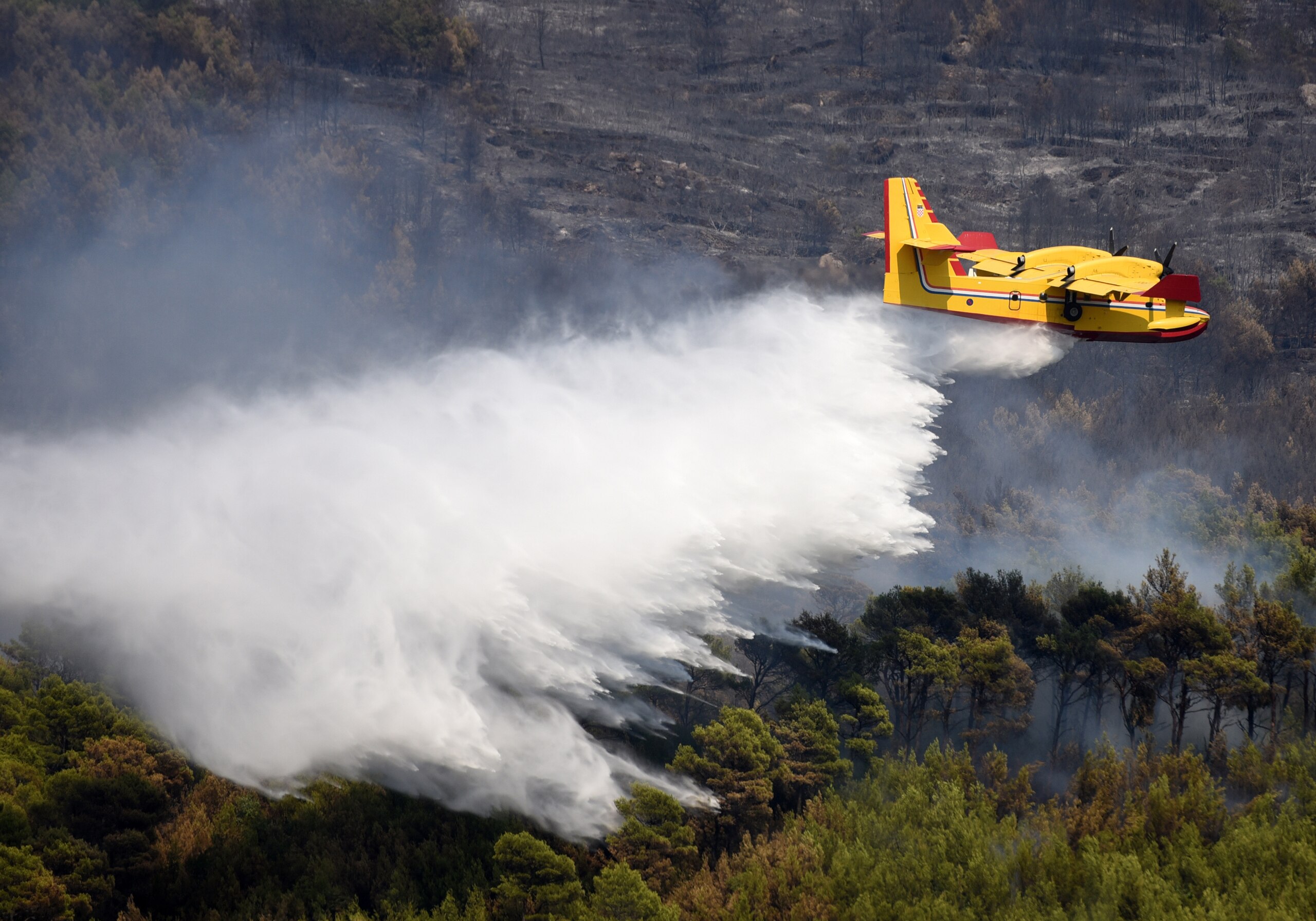
This dual capability, serving both rotary and fixed-wing operations, positions regional airports as flexible nodes in a resilient emergency response system. They provide not only staging areas for helicopters but also functional runways that can absorb diverted traffic, handle relief logistics and support evacuation missions when primary hubs are overwhelmed or inaccessible. This role extends well beyond everyday commercial functions and establishes regional airports as a practical backbone of civil protection and disaster response.
Energy Resilience and sufficient Grid Connection Points
This recognition strengthens the position of airports in communications with grid operators and planning authorities, as it underlines their essential role in supply security and emergency response. Recent legislative developments reflect this emerging role and provide a formal basis for airports to position themselves as energy and security hubs.
In the fields of energy and hydrogen, there is now a greater emphasis on security interests and the robustness of supply. Amendments to the Energy Industry Act(Energiewirtschaftsgesetz) aim to facilitate the integration of storage facilities, while changes to building law, in particular the Federal Building Code (Baugesetzbuch), are intended to privilege large-scale storage facilities with capacities above 1 MWh and underground heat and hydrogen storage in rural areas [6]. For airports, this creates the opportunity to plan energy projects that are not only economically attractive but also recognised as contributions to national resilience.
In practical terms, this means that energy produced and stored directly at the airport site gains strategic value. Airports can develop from pure transport infrastructures into full energy and logistics hubs. In normal operation, such hubs reduce energy costs, improve security of supply and lower dependence on higher-level networks. They can shift loads, store energy from renewable sources and make better use of existing grid connections. In times of crisis, the same infrastructure can supply critical consumers, emergency services or military operations with electricity, heat, fuel and logistics services. This helps to maintain the ability of the state to act, even when the surrounding systems are under stress. To realise this potential, however, airports need an integrated energy system at site level that connects generation assets, storage, charging infrastructure and relevant consumers.
Strategic Infrastructure as a Practical Classification
Not all regional airports need to be immediately classified as critical infrastructure to fulfill an essential role in national resilience. A practical approach would recognize airports as strategic infrastructure. This would acknowledge the stabilizing function of regional airports without imposing the full regulatory burden of KRITIS classification.
This is particularly relevant in the context of emerging security challenges. The increasing frequency of drone incidents near airports, for instance, can only be countered effectively through a decentralized network of airfields. Major hubs such as Frankfurt, Munich and Berlin have all experienced disruptions caused by unauthorized drone activity in recent months. Munich Airport was forced to suspend operations twice within 48 hours in early October 2025, affecting nearly 3,000 passengers [12][13]. Berlin Brandenburg Airport faced similar disruptions in November 2025 [14]. German aviation authorities reported 208 incidents through November 2025 where drones posed a danger to manned aircraft [15]. A geographically distributed system of regional airports provides redundancy: if one location is disrupted, others can absorb essential functions. This distributed resilience is a strategic asset that becomes more valuable as threats become more diverse and unpredictable.
In this perspective, investing in regional airport infrastructure is not merely a matter of transport policy but a contribution to national security architecture. By maintaining a network of capable, well-connected regional airports, Germany strengthens its ability to respond to crises, support civil protection operations and maintain essential air connectivity even when primary hubs face disruption. A formal recognition of regional airports as strategic infrastructure would provide the policy basis for targeted investment, priority treatment in grid planning and integration into national resilience strategies, without requiring each airport to meet the full criteria of critical infrastructure designation.
Holistic Development into a Energy, Mobility and Logistic Hub
Achieving this requires airports to not only invest in individual technologies but organise their on-site energy systems as a coherent whole. The main challenge is less the availability or cost of photovoltaics, batteries or charging infrastructure but rather their holistic coordination. From a critical infrastructure perspective, what matters is that local generation, storage and critical loads can be monitored and controlled in a unified way. This enables airports to prioritise essential consumers in crises, curtail non-essential demand and maintain their role as energy and security hubs.
Regional airports face diverse challenges in realising such transformations. To be future-proof, such energy systems must be planned as integrated wholes so that generation, storage and consumption work together as a single architecture. This level of coordination is complex and costly. Many regional airports lack the staff, the planning capacity and the investment scope to design and finance such long-term transformation projects on their own.
A further bottleneck is the grid. For most airports, the limiting factor is not the availability of photovoltaics or storage technologies but the ability to secure a suitable grid connection, negotiate capacity and integrate energy flows in a way that satisfies both operational needs and regulatory requirements. Grid operators, however, respond positively to projects that include on-site generation and storage, bring their own base load, and draw from the grid primarily during periods of low self-generation. They also favour projects that strengthen critical infrastructure, because these support resilience objectives in their own networks. This preference is not codified in law but reflects a commercial and operational logic. Regional airports, as shown in this paper, operate de facto as critical infrastructure and can use this position in their dialogue with grid operators.
ALBATROSS is applying this approach in ongoing partnerships with several of the above-mentioned regional airports. In these cases, ALBATROSS develops and operates integrated infrastructures that combines renewable energy solutions, electrification strategies and logistics innovation. The company’s integrated site concepts combine energy generation, storage and consumption in a long-term perspective, including considerations of energy autonomy, redundancy and crisis operation that align with KRITIS-related expectations. This holistic approach provides airports with a structured and technically robust foundation for negotiations with grid operators. When airports can demonstrate consistent long-term planning, resilience scenarios and clear operational priorities, grid operators are far more likely to support capacity expansions and grid-friendly integration.
By structuring investments through cooperation models with energy service providers or institutional investors, ALBATROSS reduces the financial burden on airports and accelerates implementation. These projects demonstrate how the idea of regional airports as critical infrastructure and energy hubs can be translated into operating systems that position airports for the emerging generation of aircraft with alternative propulsion systems.
Sources:
[1] Importance of regional airport infrastructure – https://www.europarl.europa.eu/doceo/document/E-10-2025-001864_EN.html
[2] Regionalpolitische Aspekte der Flughafeninfrastruktur- https://www.iwkoeln.de/studien/klaus-heiner-roehl-regionalpolitische-aspekte-der-flughafeninfrastruktur-53578.html
[3] SALIS – https://www.bundeswehr.de/de/organisation/unterstuetzungsbereich/logistik/strategischer-transport
[4] Die Flugbereitschaft des Bundesministeriums der Verteidigung – https://www.bundeswehr.de/de/meldungen/flugbereitschaft-bundesministeriums-verteidigung-5358042
[5] Bundeskabinett beschließt Gesetzentwurf zum KRITIS-Dachgesetz – https://www.bmi.bund.de/SharedDocs/pressemitteilungen/DE/2025/09/kritis-dg-kabinett.html
[6] Neuregelung § 35 BauGB: Batteriespeicher ab 1 MWh künftig „privilegierte Vorhaben im Außenbereich“ – https://www.energie-experten.org/news/neuregelung-35-baugb-batteriespeicher-ab-1-mwh-kuenftig-privilegierte-vorhaben-im-aussenbereich#:~:text=Neuregelung § 35 BauGB%3A Batteriespeicher,künftig „privilegierte Vorhaben im Außenbereich“
[7] Bundeswehr-Fotos Wir.Dienen.Deutschland – https://www.flickr.com/photos/46257718@N02/6766182701
[8] Trainingsflüge der Bundeswehr, Airport Hof-Plauen – https://www.airport-hof.de/buerger-information/bundeswehr
[9] A400M at Siegerland Airport – https://www.wp.de/staedte/siegerland/article241557082/Tiefflug-uebers-Siegerland-Riesige-A400-der-Luftwaffe-landet.html
[10] Polizeihubschrauberstaffel Rheinland-Pfalz in Winningen – https://www.kuladig.de/Objektansicht/KLD-252007
[11] Hubschrauber über Lantershofen, der Heide und dem Ahrtal – https://lantershofen.de/hier-heute/neues-vom-dorf/2021/august/hubschrauber-ueber-lantershofen-der-heide-und-dem-ahrtal/
[12] Munich Airport – Press: Drone sightings at Munich Airport – https://www.munich-airport.com/press-drone-sighting-at-munich-airport-35709068
[13] NBC News – Flights resume at Munich airport after drone sightings disrupt travel – https://www.nbcnews.com/world/europe/drone-sightings-disrupt-munich-airport-halt-flights-impact-thousands-rcna235327
[14] Travel and Tour World – Europe Faces Chaos as Germany Suspends Flights at Berlin Airport – https://www.travelandtourworld.com/news/article/europe-faces-chaos-as-germany-suspends-flights-at-berlin-airport-due-to-drone-sightings-multiple-cancellations-impacting-zurich-heathrow-frankfurt-stockholm-and-more/
[15] Travel and Tour World – Germany’s Rising Drone Threat – https://www.travelandtourworld.com/news/article/germanys-rising-drone-threat-how-berlin-frankfurt-and-munich-airports-are-battling-growing-aviation-risks-heres-what-you-need-to-know-about-protecting-yourselves/
[16] AeroWest GmbH – Schnelligkeit, Bequemlichkeit und Zuverlässigkeit – https://www.brawogroup.de/aktuelles/detail/aerowest-gmbh-schnelligkeit-bequemlichkeit-und-zuverlaessigkeit
[17] AeroWest – Ambulance – https://aerowest.net/ambulanz/?lang=en
[18] DRF Luftrettung, Learjet 35A – https://www.drf-luftrettung.de/en/learjet-35a
[19] Wildfire breaks out in Bohemian Switzerland – https://bohemiadventures.com/wildfire-in-bohemian-switzerland/
[20] A Croatian Air Force CL-415 during dire season – https://en.wikipedia.org/wiki/Canadair_CL-415#/media/File:Hrvatski_nebeski_vatrogasci_II.jpg