Orignal text in German: LINK. Following the English translation:
How Regional Airports Enable the Electrification of Aviation
The electrification of air transport is usually discussed from the perspective of new aircraft. In doing so, a central factor fades into the background: energy infrastructure on the ground, writes Marius Wedemeyer, Managing Director of Albatross Holding. Regional airports could develop into decisive enablers of a new short haul mobility.
By Marius Wedemeyer
February 18, 2026, 12:30 pm
- Battery electric aircraft will gradually enter regional passenger and cargo operations from 2030 onwards.
- The bottleneck lies in ground infrastructure, in particular in insufficient grid connection capacity and fast charging capabilities.
- Regional airports should evolve into decentralized energy centers with photovoltaics, storage systems, and intelligent load management.
- A coordinated airport network facilitates planning, financing, and the harmonization of charging and operational standards.
- Electrification enables new business models, strengthens resilience, and integrates drones as well as regional logistics.

Why Energy Infrastructure Determines the Success of New Air Transport Concepts
The electrification of aviation is often discussed from the perspective of new aircraft. Range, seating capacity, battery density, and certification timelines are in focus. Yet a central factor is often overlooked: the role of ground infrastructure. Regional airports in particular could develop over the coming years into decisive enablers of a new short haul mobility. Not as smaller versions of international hubs, but as independent energy and mobility nodes.
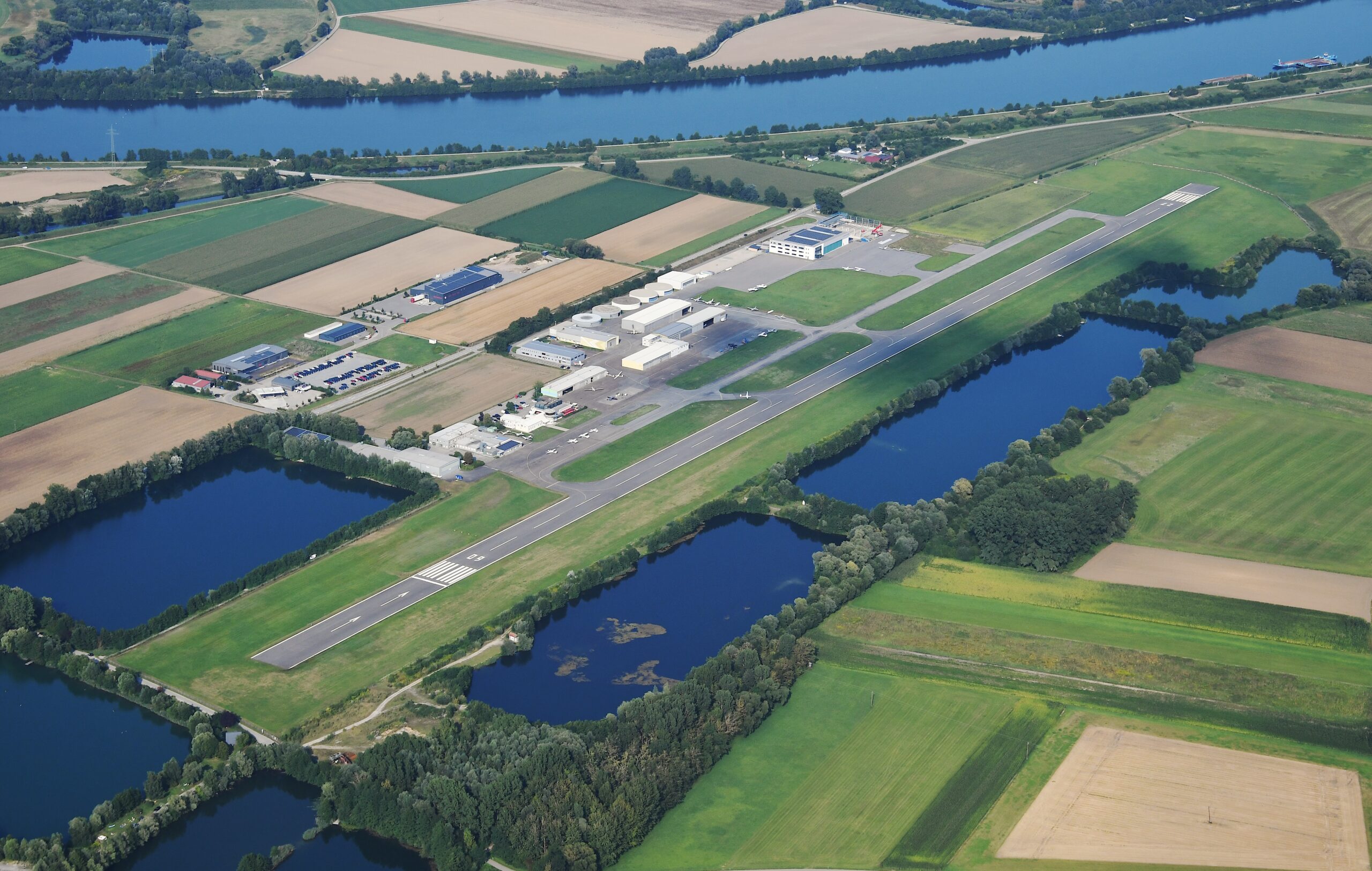
Regional airports are second or third category airports that connect smaller geographic areas and usually handle significantly lower passenger volumes than international hubs. They are often used by low cost carriers or specialize in business aviation, training, maintenance, and general aviation.
“Regional airports will play a central role in the electrification of short haul air transport in the future. Our vision is to develop these locations into independent energy, mobility, and logistics hubs that strengthen regional networks and enable economic development. Electric aircraft are a key building block in this context. They create the prerequisite for operating passenger and cargo transport on short haul routes without emissions. At the same time, many regional airports have sufficient space to generate renewable energy themselves. Not only for flight operations, but also for adjacent industry, digital infrastructure, or the electrification of vehicle fleets from passenger cars to heavy duty commercial vehicles.”
– Dr. Stefan Breunig, Managing Director of ALBATROSS Holding GmbH, in the Holm Blog interview “Electrification in Aviation new era of short haul?” dated September 18, 2025
In Europe, regional airports account for a significant share of air connectivity. According to ACI Europe, more than half of all direct connections are operated through these airports. In Germany alone, more than 500 airfields of various categories exist, ranging from commercial airfields to regional airports. This density is almost unique in Europe and opens up structural opportunities that have so far only been used to a limited extent.
Electric Flying Changes the Logic of Short Haul
Battery electric aircraft are expected to gradually enter regional passenger and cargo operations from 2030 onwards. Their area of application clearly lies in short haul routes, with lower seating capacities and high rotation frequencies. Particularly relevant are routes that are currently poorly connected to high speed rail or that must overcome geographic barriers such as bodies of water or mountain ranges.

From an energy perspective, fully electric aircraft outperform most alternative propulsion concepts. Studies show that, when fully electrified, they cause the lowest climate impact and achieve the highest efficiency. At the same time, noise and local emissions decrease significantly, opening up new operating windows and acceptance potential.
The Bottleneck Is Not the Aircraft
The limiting factor for the market ramp up of electric regional aircraft is less the aircraft itself and more the infrastructure on the ground. The power required for fast charging aircraft significantly exceeds the grid connection capacity currently available at many regional airports. At the same time, electricity demand is also increasing for other electrified processes at the airport, such as ground vehicles, buildings, logistics, or adjacent commercial areas.
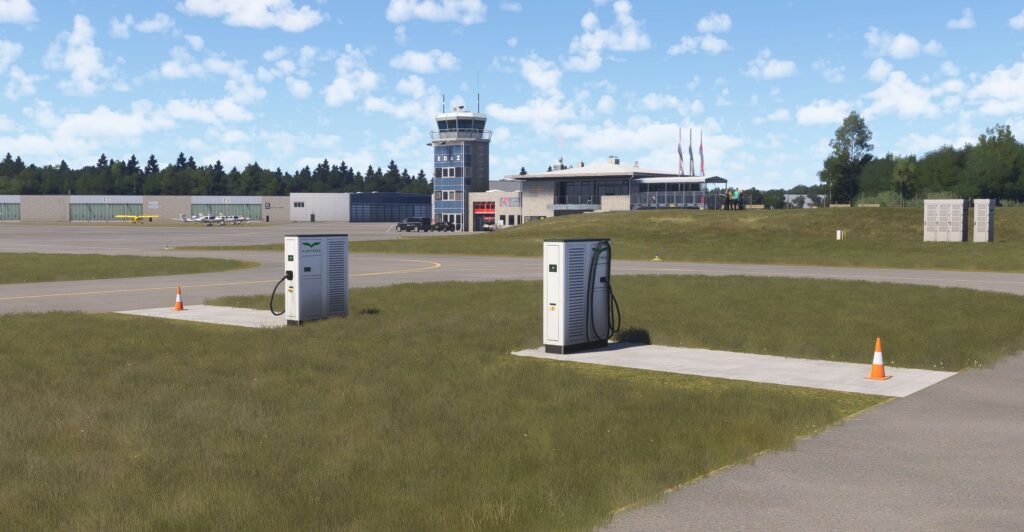
Without a systemic view of energy supply, bottlenecks are likely that would severely limit the operational benefits of electric aircraft. Traditional grid expansion projects are capital intensive, lengthy, and regulatory complex. This is why local energy generation is increasingly coming into focus.
“The electrification of aviation begins at the grid connection, and this is precisely where the greatest challenges lie. Many regional airfields first require a comprehensive upgrade of their grid connections. Such measures only make sense within the framework of holistic planning. Only if future development areas, such as currently at Schönhagen Airfield, or adjacent commercial areas are integrated at an early stage can a viable overall system emerge. Regional airports should in future be conceived as districts: with local energy production via photovoltaics, intelligent load distribution, and large scale storage systems. In this way, they not only relieve the upstream power grid, but also become drivers of regional value creation.”
– Marius Wedemeyer, Managing Director of Albatross Holding GmbH
Airports as Decentralized Energy Centers
Regional airports often have large contiguous areas. Roofs, open spaces, and peripheral areas offer considerable potential for photovoltaics. In combination with stationary battery storage, peak loads can be absorbed and locally generated energy can be used in a targeted manner for highly dynamic applications such as aircraft charging.
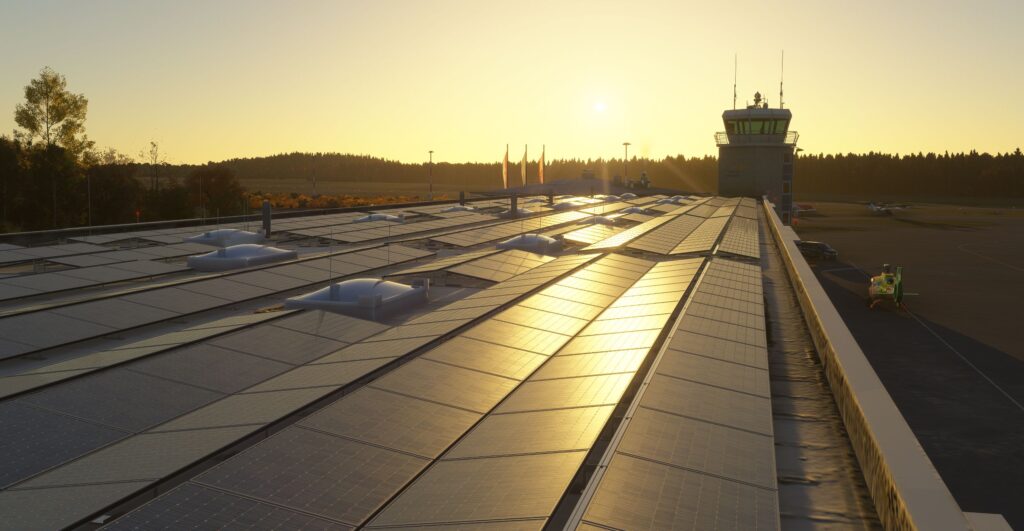
“Nearly every airfield today is flooded with offers to lease its open spaces and roofs for photovoltaic generation. However, these offers do not prepare airfields for the aviation specific energy requirements of the future, and their economic value is negligible. If future aviation and mobility concepts are to succeed, it is essential that the necessary regional airfield infrastructure is preserved and can be operated economically with these concepts. This is in the interest of all stakeholders, not only the airfield operators.”
– Dr. Ing. Klaus Jürgen Schwahn, Managing Director, Schönhagen Airfield Company
Such an approach not only relieves the public grid, but also increases the resilience of the locations. Airports thus develop from pure energy consumers into active energy managers. This role is gaining importance beyond aviation as well, for example in supplying neighboring industry, logistics, or digital infrastructure.
Multimodal Nodes Instead of Isolated Infrastructure
Electric regional aircraft are only one component of a larger system. At the same time, the development of unmanned aircraft is progressing. The European Drone Strategy 2.0 provides for the establishment of an integrated and sustainable drone ecosystem. Regional locations will play an important role in this.
In the future, two main use cases can be distinguished: short range drones for the last mile within the region and larger autonomous fixed wing aircraft for transport between airports. Regional airports offer ideal conditions for both scenarios. They provide charging and maintenance infrastructure, enable safe traffic management via U Space concepts, and link air transport with existing logistics structures.
Economic and Strategic Implications
The transformation of regional airports into energy and mobility hubs is not only a question of sustainability. It also has economic and strategic relevance. Electric aviation can enable new business models, for example on previously unprofitable routes or in time critical cargo and medical transport.
“At Hof Plauen Airport, we are pursuing a long term vision to unlock the full economic potential for the region. We have the potential across all areas of aviation to build new infrastructure for the future that is not only required by airports or airlines. An airport today can be an economic platform for all stakeholders and a wide variety of business models.”
– Ralf Kaußler, Managing Director, Hof Plauen Airport
At the same time, decentralized infrastructure is gaining importance for supply security, crisis management, and resilience. Regional airports can function as redundant nodes within the mobility and energy system. This perspective is still insufficiently considered in the current national mobility strategy, but is likely to gain weight in the coming years.
From Individual Locations to a Coordinated Airport Network
The electrification of regional aviation cannot be meaningfully implemented in isolation at individual locations. Charging capacities, energy generation, operating models, and investments only unfold their full benefits when coordinated across sites. Electric regional aircraft require reliable framework conditions along entire routes and networks.
Against this background, Albatross has established a coordinated airport network for electric regional air mobility. In a first phase, regional airports across Germany have committed to jointly developing their infrastructure for the future operation of electric aircraft. The network development is supported by the Interest Group of Regional Airfields, which contributes the perspective of a broad range of regional locations. The participating sites represent different regional and operational conditions and serve as the foundation for a scalable network model.
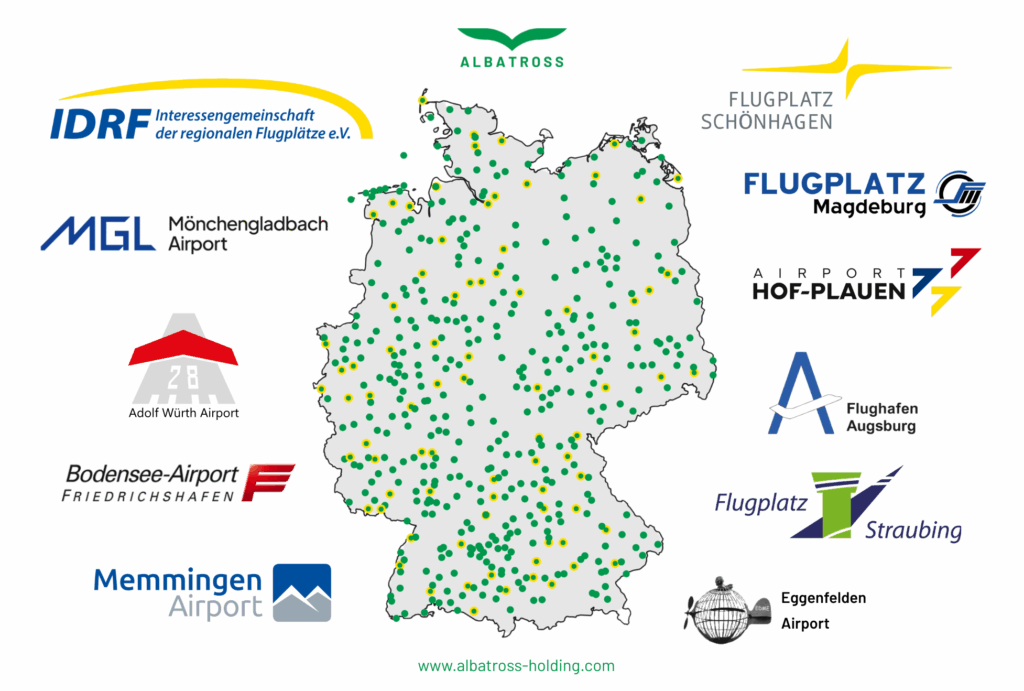
The network approach enables joint planning of energy infrastructure, charging capacities, and operating models. Standards can be harmonized across the network and coordinated at an early stage with aircraft manufacturers. At the same time, bundling multiple locations facilitates the financing of photovoltaic systems, battery storage, and charging infrastructure, and creates planning certainty for airports, municipalities, utilities, and industrial partners.
Conclusion
The future of electric short haul aviation will not be decided solely in the cockpit, but on the apron and in the grid connection room. Regional airports have the potential to become central building blocks of a new, climate friendly aviation architecture. The prerequisite is integrated thinking that connects aviation, energy, logistics, and regulation.
Anyone who seriously wants to advance the electrification of aviation should not regard regional airports as a marginal note, but as a strategic platform for innovation, value creation, and regional development.