When the decarbonization of aviation is discussed, the focus is usually on commercial airlines, Sustainable Aviation Fuels, and hydrogen-powered large aircraft. This perspective is understandable, as the majority of emissions originate in scheduled air transport. While these technologies still face long development and certification cycles as well as substantial infrastructure investments, electric aviation in General Aviation is already possible today.
General Aviation as a technology enabler
Depending on the aviation segment, significantly different technological pathways to emission reduction emerge. In commercial aviation, range requirements and payloads continue to necessitate the use of liquid energy carriers. Accordingly, the pathways focus on Sustainable Aviation Fuels (SAF) and hydrogen, coupled with certification timelines of ten to fifteen years and infrastructure investments in the billions. Regional Air Mobility and Business Aviation, by contrast, open up earlier transition opportunities. Projects such as Vaeridion’s fully electric nine-seater with approximately 400 kilometers of range from 2030 [1] or Heart Aerospace’s hybrid-electric ES-30 [2] with a planned market entry in 2028 demonstrate the technical potential of these segments.
In aviation cycles, that is essentially tomorrow. Accordingly, the question of operational implementation is increasingly coming to the fore. For economically viable operation of electric regional aircraft, fast turnarounds are critical. These can only be achieved with high-performance charging infrastructure that delivers power in the megawatt range and is reliably integrated into flight operations.
General Aviation is structurally positioned differently. With typically short flight times of around 30 to 90 minutes, simplified certification procedures such as the DULV type approval (instead of the lengthy EASA Part 23), and comparatively low energy infrastructure requirements, it offers ideal conditions for the early deployment of electric propulsion. General Aviation thus serves as a natural technology enabler for new propulsion systems.
The Bavarian State Government has set itself the goal in its Aviation Strategy 2030 of preserving and expanding competencies in the aviation industry, particularly for future topics such as (hybrid-)electric flight. This approach is clearly summarized in the strategy paper [4]:
“The path to deployment in commercial air transport, however, leads through the development of technology enablers for small manned and unmanned aircraft with lower performance requirements.”
— Bavarian Aviation Strategy 2030
The chicken-and-egg problem of electric aviation
Although General Aviation offers favorable conditions for the use of electric propulsion, electric flight operations remain subject to significant limitations. The currently only EASA-certified electric aircraft in Europe, the Pipistrel Velis Electro (see below), is considered a technological pioneer but is limited by a highly restricted range and flight time. In practical application, electric flights have therefore largely been confined to circuit patterns and short training flights. Additionally, the charging infrastructure necessary for regular flight operations is currently available at only a few airfields.
This situation reflects a classic chicken-and-egg problem. Flight schools and operators only invest in electric aircraft when charging infrastructure is available in sufficient quantity and geographic distribution. Conversely, charging infrastructure is typically only built when there is reliable demand from electrically powered aircraft. Without coordinated action, electric flight operations remain limited to individual locations and local pilot projects.
The collaborative project “E-Flight Route Bavaria”
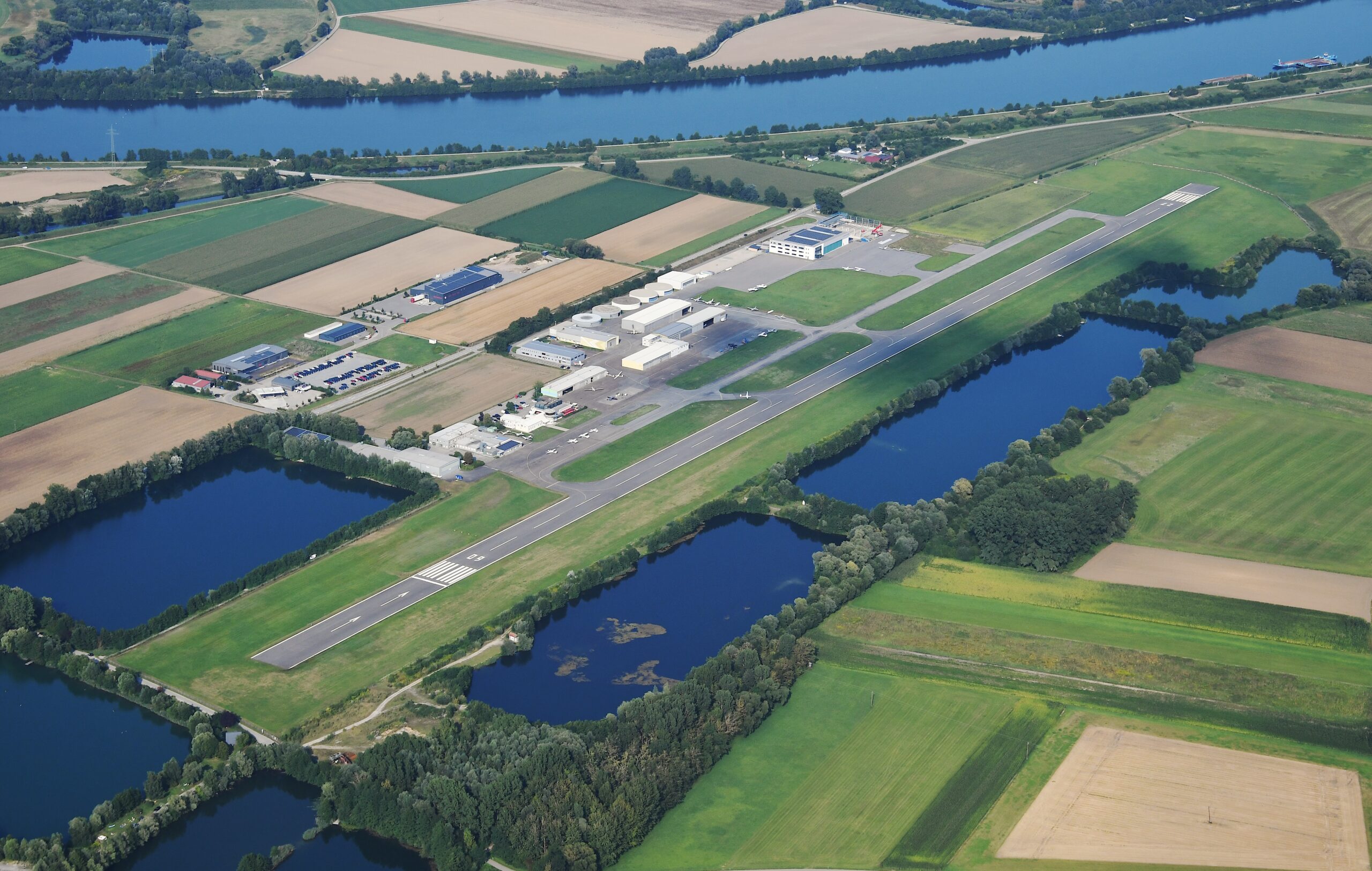
The E-Flight Route Bavaria addresses precisely this point. It is designed as a collaborative project of the regional airfields Hof-Plauen, Straubing-Wallmühle, Augsburg, Landshut, Kempten-Durach, and the Free State of Bavaria. The goal is the coordinated expansion and development of charging infrastructure for electrically powered aircraft at multiple airfields within a spatially connected network. The participating locations are positioned so that they can be reached by electric aircraft within a maximum flight time of approximately one hour. In this way, a regional charging network is being created for the first time that enables electric flight operations beyond the individual airfield [5].
The project idea originated from the practical experience of individual airfields. As early as 2023, Kempten-Durach airfield pioneered charging infrastructure development. At AERO 2024, this evolved into the vision of a coordinated charging network within an airfield association. The goal is to provide a visible impulse for the aviation industry, for clubs, and for policymakers, and to enable the transition from demonstration operations to connected operational use [6].
From the outset, the project has been accompanied by political support. The initial presentation took place at the end of 2024 at Straubing airfield in the presence of Bavarian Transport Minister Christian Bernreiter [8]. Subsequently, regional legislators were involved, the necessary budget was defined, and further discussions were held with political decision-makers and airfield shareholders. The project is supported with total funding of 1.09 million euros [3].

A central objective of the E-Flight Route Bavaria is the definition of a uniform standard for charging infrastructure at General Aviation airfields. Stationary charging points with multiple power connections are planned, including 16-ampere and 32-ampere CEE connectors, Schuko sockets, and wallboxes with 22 kilowatt capacity. In addition, fast-charging stations with up to 150 kilowatt capacity and two CCS charging points are to be installed [3]. Depending on the location, mobile charging solutions, photovoltaic systems, an increase in grid connection capacity, and cabling upgrades are also planned [5].
The project status shows significant progress. For the airfields Augsburg, Landshut, and Straubing, approval for an early start of measures had already been granted. The official handover of the funding decisions took place on 18 December 2025 at Augsburg Airport in the presence of the Bavarian Transport Minister. The start of construction and technical implementation is scheduled for 2026 [5].
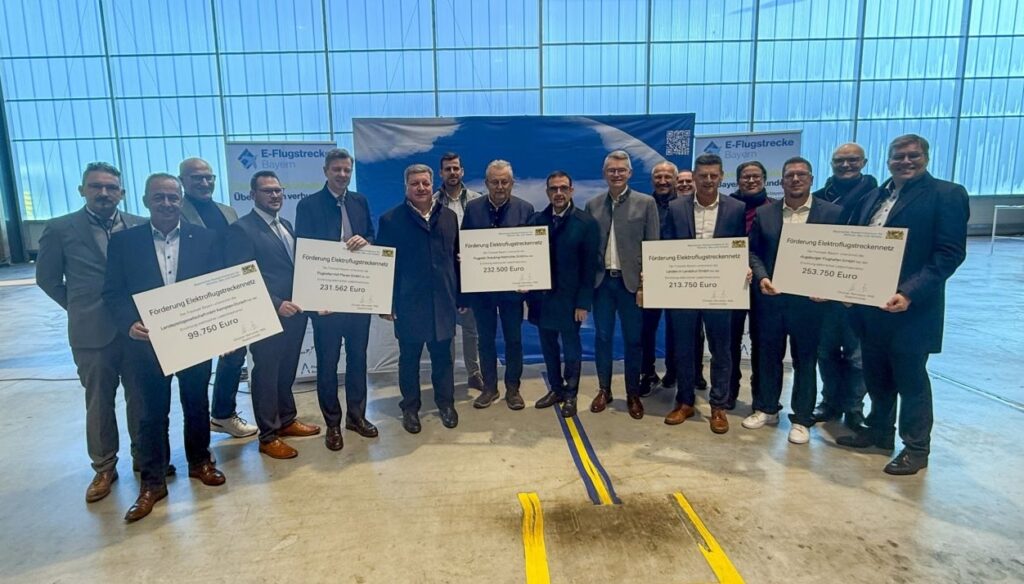
“Electric aircraft are climate-friendly and also remarkably quiet. With the appropriate charging infrastructure, we are giving electric aviation further momentum. At the same time, we are specifically strengthening our regional airfields and making them ready for the mobility of tomorrow.”
— Transport Minister Christian Bernreiter [16]
With the E-Flight Route Bavaria, a coordinated, geographically distributed infrastructure for electric flight operations in General Aviation is thus being created for the first time. Through the network approach, the existing chicken-and-egg problem is specifically addressed and a foundation is established on which further electric aircraft can be deployed in an economically viable manner.
Pioneering work in electric General Aviation
The Pipistrel Velis Electro marks a milestone in the development of electric aviation. It is the world’s first fully electric aircraft with EASA type certification, granted in June 2020, and has been used in regular flight operations ever since. With this, electric aviation left the experimental framework for the first time and became part of certified air transport. Since its market introduction, more than one hundred units have been delivered worldwide. The hundredth aircraft was delivered in March 2024 at Mannheim Airport [10].
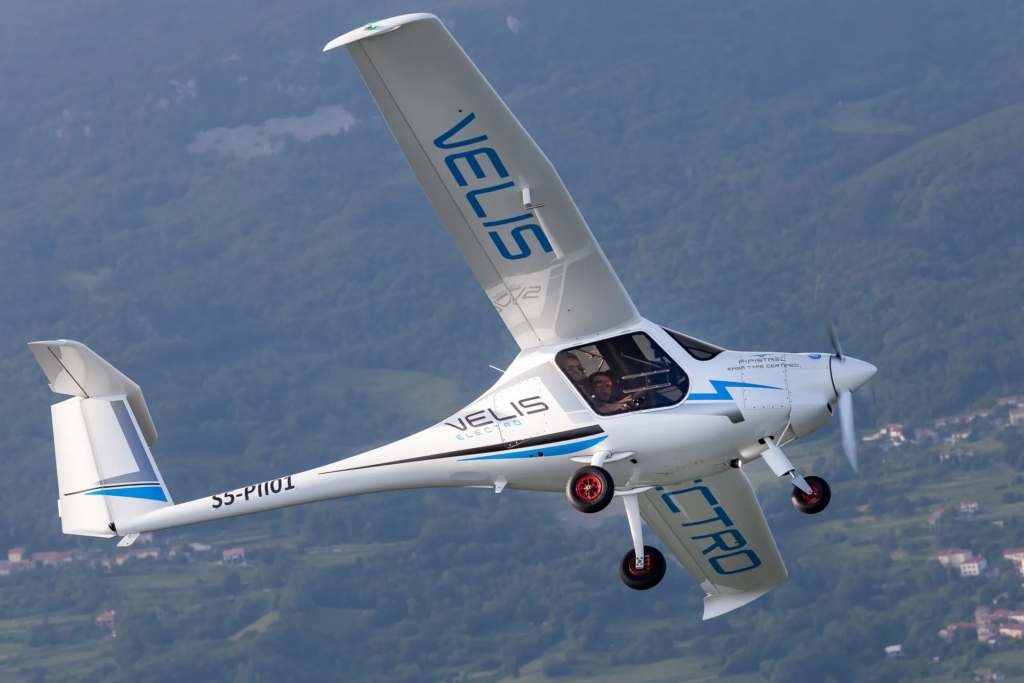
In practical use, however, clear limitations become apparent. The flight time and range of the Velis Electro are severely limited, meaning that its use has so far been largely confined to circuit patterns and short training flights. Nevertheless, the type serves an important reference function. In particular, the significantly lower noise emissions compared to conventional training aircraft represent a major advantage. The ALBATROSS team was also able to experience this firsthand during sightseeing flights in May 2025, where the low noise level was clearly noticeable even on the ground [15].

The Velis Electro thus stands as an example of the first phase of electric General Aviation. It demonstrates the fundamental technical and regulatory feasibility, but at the same time makes clear that range, charging infrastructure, and operational flexibility remain the central bottlenecks for broader adoption.
The Bavarian answer to the range problem
The Bavarian company Elektra Solar pursues a more advanced approach. Its development lineage dates back to 2015, when the Elektra One Solar became the first solar-electric aircraft to cross the Alps in both directions, attracting international attention. This flight underscored Bavaria’s technological expertise in the field of electric aviation at an early stage.
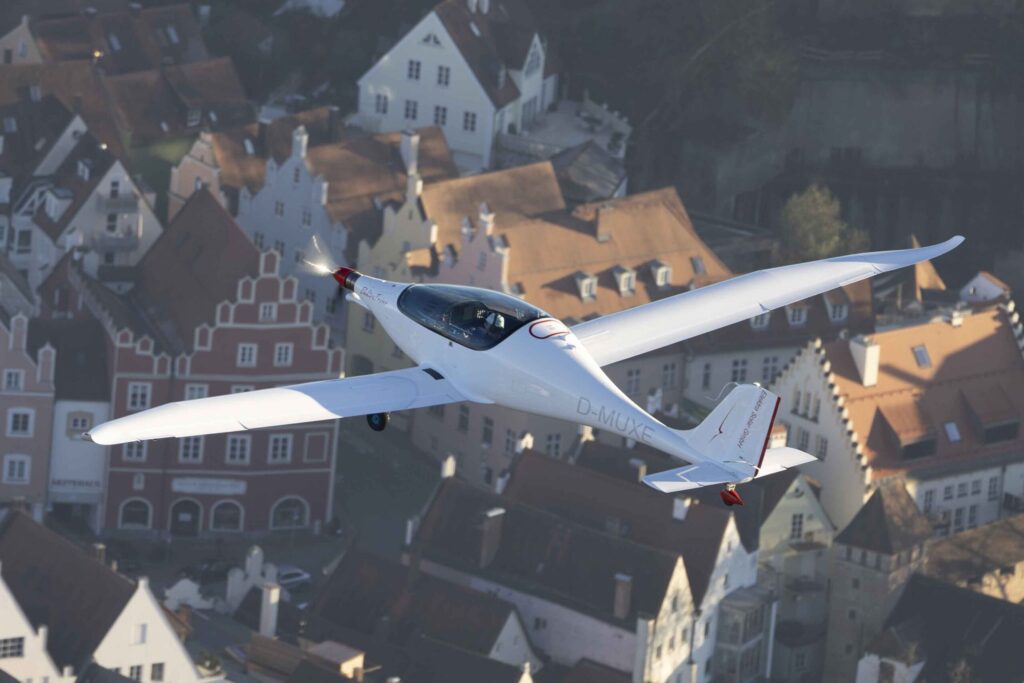
Building on this foundation, the Elektra Trainer was developed. In 2023, it received an individual permit as the first purely electric two-seat ultralight aircraft, issued by the DULV and the German Federal Ministry for Digital and Transport [11]. In 2024, type certification followed, enabling regular series production [12].
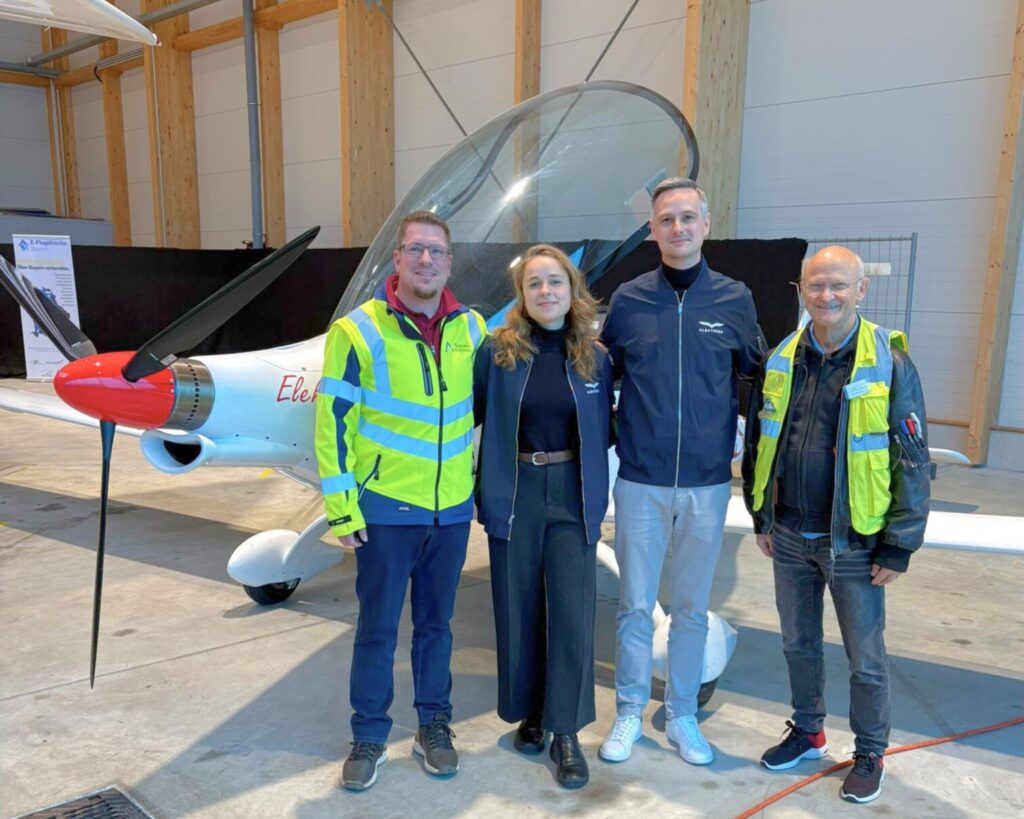
With a flight time of up to 2.5 hours and a range of approximately 300 kilometers, the Elektra Trainer significantly extends the operational spectrum of electric aircraft beyond today’s level. Two electric motors deliver a peak power output of up to 70 kilowatts. The energy is supplied by a 30 kilowatt-hour battery, with an optional 36 kilowatt-hours available. Charging is performed via a 22 kilowatt wallbox with a Type 2 connector, making it compatible with standard charging infrastructure from the automotive sector. The noise level is below 50 decibels A-weighted, roughly equivalent to moderate rainfall [13].
Technical advancements underscore the maturity of the type. Winglets reduce energy consumption by up to 20 percent through improved aerodynamics. The design also allows the use of thermals, similar to gliders. The consistent Type 2 compatibility enables charging at a wide variety of existing charging points [14].
With the Elektra Trainer, Elektra Solar delivers an aircraft that is not only electrically powered but can also compete operationally with conventional training aircraft. The type thus specifically addresses the range and operational limitations and demonstrates how electric General Aviation can grow beyond pure demonstration operations.
Holistic development into an energy, mobility, and logistics hub
The development of charging infrastructure for electric aircraft is more than the sum of individual technical projects. It offers the opportunity for a comprehensive transformation of regional airfields into multifunctional energy, mobility, and logistics platforms. With this understanding, ALBATROSS develops, finances, and operates integrated energy infrastructure as a strategic partner and supports airfields in the introduction of new mobility and logistics concepts.
“At Hof-Plauen Airport, we are pursuing a long-term vision to unlock the full economic potential for the region. We have the potential across all aviation sectors to build a new infrastructure for the future that is not only needed by airports or airlines. An airport could now be an economic platform for everyone and for every business case. To achieve this goal, we and our partner airports (Straubing, Landshut, Augsburg & Kempten) have recognized that we can only accomplish this together. We want to establish a new charging infrastructure standard for aviation and build the first aviation charging network in Bavaria with our pilot project ‘E-Flight Route Bavaria.’ ALBATROSS supports us very closely in the planning of the project and in the integration into the broader microgrid infrastructure. However, ALBATROSS’s concept is more long-term in nature and broader in scope. Within our plan to transform the airport into an energy, mobility, and logistics hub, the scope of the Bavarian E-Flight Route can be perfectly embedded as part of the airport master plan.”
— Ralf Kaußler, Managing Director of Flughafen Hof-Plauen GmbH & Co. KG
ALBATROSS’s approach is based on coupling locally generated energy with new use cases. Large-scale photovoltaic systems and battery storage form the foundation for a stable on-site energy supply. This is linked with charging infrastructure for electric vehicles, ground-based mobility, and electric aircraft. On this basis, regionally connected airfields emerge that not only enable aviation but function as economic platforms for diverse business models.
The goal is to build a sustainable aviation route network in which regional airfields across Europe form the backbone for electric Regional Air Mobility. Harmonized technical and operational standards enable scaling beyond individual locations and create planning certainty for operators, manufacturers, and infrastructure investors.
This holistic approach is also significant from an economic perspective. Charging infrastructure for electric aircraft at regional airfields can contribute to economically viable revenue streams through the integration of energy generation, energy storage, ground mobility, and logistics. At the same time, an infrastructural foundation is created that can flexibly accommodate future requirements of electric and hybrid aviation.
ALBATROSS sees itself as a long-term development partner for airfields. The E-Flight Route Bavaria integrates seamlessly as a concrete pilot project into overarching airport master plans that pursue a step-by-step transformation into energy, mobility, and logistics hubs.
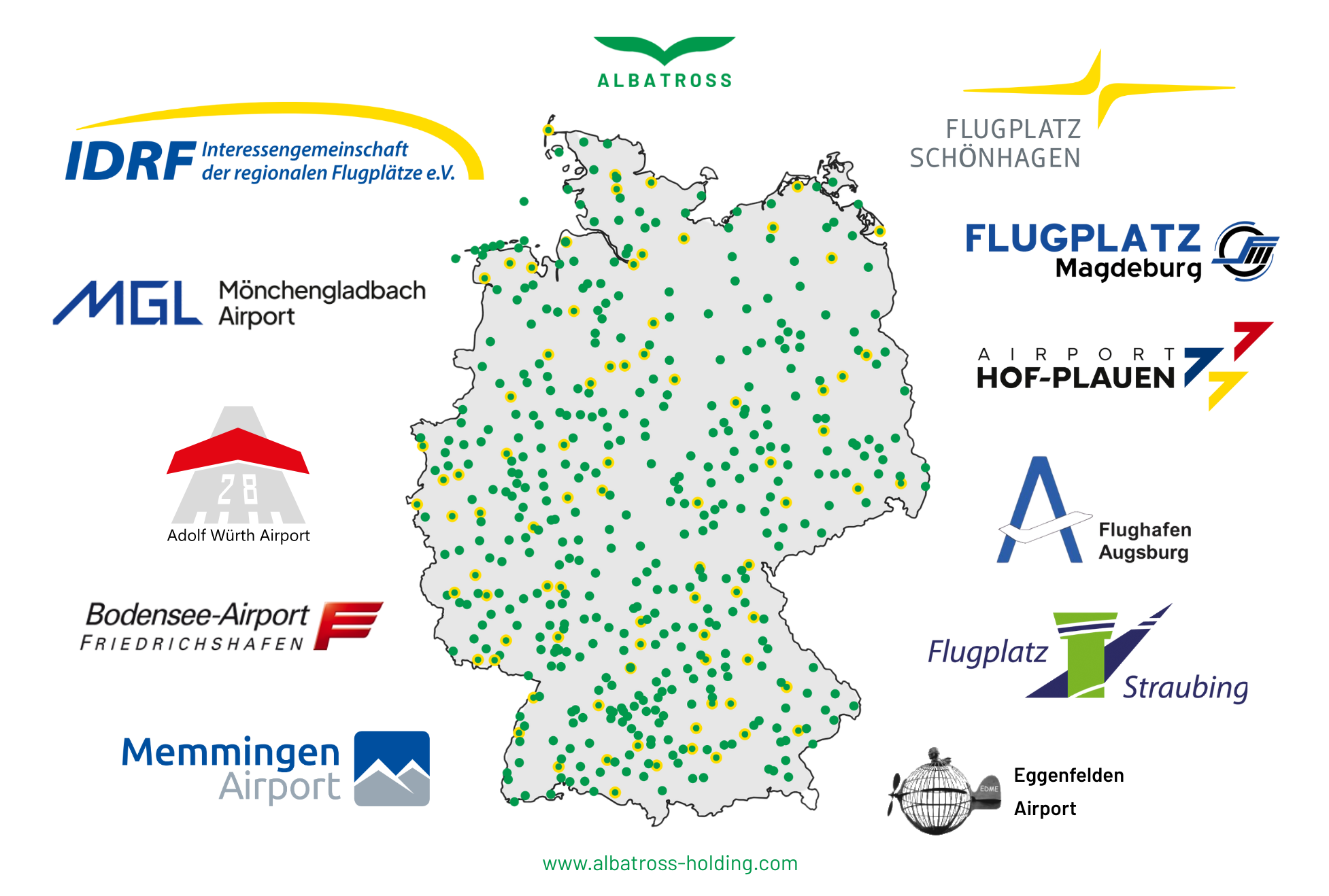
The close involvement in the industry is also reflected institutionally. Like the five Bavarian airfields mentioned, ALBATROSS is an active member of the Interessengemeinschaft der regionalen Flugplätze e.V. (IDRF), an association with more than seventy regional airfields and companies from Germany and Europe. In November 2025, Christian Bernreiter, Bavarian State Minister for Housing, Construction, and Transport, also announced IDRF membership.
A holistic blueprint for all of Germany
Taking the overall picture into account, Bavaria has developed a robust blueprint for entering electric aviation through the combination of electric General Aviation, coordinated charging infrastructure, and political support. What is decisive here is not solely the funding of individual aircraft or charging points, but the embedding of infrastructure into a holistic development of regional airfields. By connecting technical testing, operationally usable infrastructure, and strategic airport development, a scalable approach emerges that is transferable beyond Bavaria.
Accordingly, interest is also growing in other federal states to establish comparable networks for electric aviation. ALBATROSS is pleased to accompany and support these initiatives as a strategic partner, in order to transfer and further develop the experience gained and to advance the development of regional charging and energy networks for General Aviation throughout Germany.
Sources:
[1] Vaeridion Whitepaper – https://vaeridion.com/wp-content/uploads/2025/03/Electric_flight_Isnt_Just_An_Idea_White_Paper.pdf
[2] Heart Aerospace Whitepaper – https://heartaerospace.com/wp-content/uploads/2024/05/heart-digital-brochure.pdf
[3] Airport Hof-Plauen – Umwelt & Klimaschutz – https://www.airport-hof.de/unternehmen/umwelt-klimaschutz
[4] Bayerische Luftfahrtstrategie 2030 – https://www.stmwi.bayern.de/fileadmin/user_upload/stmwi/publikationen/pdf/2024-05-06_Bayerisch_Luftfahrtstrategie_2030_ungesichert.pdf
[5] Vortrag von Ralf Kaußler, Florian Kindzorra, Maximilian Hartwig und Konstantin Hadrossek auf der IDRF-Veranstaltung “Zukunftswerkstatt” am 12.11.2025 in Berlin
[6] 2. Elektroflugtag in Kempten-Durach – https://www.idrf.de/2-elektroflugtag-in-kempten-durach/
[7] Pipistrel Velis Electro, Airjuice Photography – https://commons.wikimedia.org/wiki/File:Pipistrel_Velis_Electro_9992.jpg
[8] Bayerisches Staatsministerium für Wohnen, Bau und Verkehr: LinkedIn-Post, 2. Dezember 2024 – https://www.linkedin.com/posts/wirbauenbayern_flugverkehr-flughafen-elektroflug-activity-7269041704580636673-BsdD
[9] Zukunftswerkstatt IDRF Tagung 12.11.2025 – https://www.linkedin.com/feed/update/urn:li:activity:7396147740952408064
[10] Pipistrel Aircraft: 100. Velis Electro ausgeliefert – https://www.fliegermagazin.de/news/pipistrel-aircraft-100-velis-electro-ausgeliefert-reichweite-elektromotor/#google_vignette
[11] Elektra Trainer erhält Ultraleicht-Zulassung – https://www.elektra-solar.com/elektra-trainer-erhalt-ultraleicht-zulassung/
[12] Elektra Trainer erhält Musterzulassung – https://www.fliegermagazin.de/news/elektra-trainer-erhaelt-musterzulassung/
[13] Elektra Trainer – https://www.elektra-solar.com/products/elektra-trainer-solar/
[14] Die neue Version der Elektra Trainer auf der AERO 2024 – https://www.fliegermagazin.de/news/die-neue-version-der-elektra-trainer-auf-der-aero-2024/
[15] Mitgliedertagung der Interessengemeinschaft der regionalen Flugplätze e.V. – https://www.linkedin.com/posts/dr-stefan-breunig-75653764_regionalflughäfen-und-flugplätze-spielen-activity-7328701962256838657-sG_4/?utm_source=social_share_send&utm_medium=member_desktop_web&rcm=ACoAAEHsrxoBSW0kHNBZy_Qhq3hjOehBGDHKFXM
[16] Übergabe des Förderbescheids am 18.12.2025 durch den bayrischen Verkehrsminister Christian Bernreiter am Flughafen Augsburg – https://www.linkedin.com/posts/wirbauenbayern_elektroflug-nachhaltigemobilitaeut-luftfahrtderzukunft-activity-7407390508597006336-ZHnI?utm_source=social_share_send&utm_medium=member_desktop_web&rcm=ACoAAEHsrxoBSW0kHNBZy_Qhq3hjOehBGDHKFXM